(106 posts)
Jul 29, 2010 12:52 am
The First Three
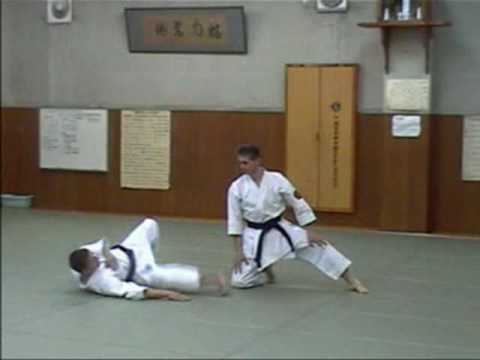
OK guys I am on a renewed deep study of the atemi waza. I am in deep search of the what each motion really represents. I am gonna break a few eggs in my search, but after all questioning what we think we know is my contribution to the art. I guess I am a meta-technician - the exploration of the 'whys' of technique.I reviewed Youtube Sensei's work from around the world, then I re-watched Nick's instructional work. Again, I want to thank the Oklahoma crew for putting together the great videos.
Nick in the video labeled the distinctive features of the throws.
Shomen ate - Nick said the hand changes are the distinctive feature
Agamae ate - Nick said the elbow control is the distinctive feature
Gyaku - Nick said entering the center line is the distinctive feature
I question are these really the distinctive features of the techniques? Maybe in this kata, or the expression of the kata as it has been handed to us. But if we use this kata as a foundation of expression of the multifacted manifestation of aikido technique perhaps we need to dig deeper.
Shomen ate is commonly performed single hand to the face, just look at Gozo Shioda, or even Nick in his multiple attach video.
Aigamae is seen in the koryu dai san tachi dori segement without elbow control. Actually the big 10 aiki nage is really a form of aigamae ate. No elbow control there, at least not the way I do it.
I can buy the center line control of gyaku, but really this is could be a distinctive feature of all of the first 3, or even the atemi waza...or even the 17.
So what are the distinctive features you ask? Patience young one....I believe the answer lies in the name of the techniques themselves. You see I am a bit of a literal interpretation sort of person.
1. SHOMEN-ATE: (front head) attack. Shomen means front or forward.
2. AI GAMAE-ATE: Ai(same)(mutual). Gamae (stance or posture). Mutual stance strike.
3. GYAKU GAMAE-ATE: Reverse posture attack. Opposite. Gyaku means contrary or reverse.
I propose Architectural relationships is the distinctive feature of these techniques.
front, mutual and opposed stances define the techniques
Do the specific connections define them? I do not think so. I have been experimenting using the Architectural relationship model, and i find with every technique I can find at least 5-7 points on my body I can connect to my partner and cause kuzushi/structural failure.
So I propose the techniques - and their myriad expressions are found in the relationship of the stances (another word for how the centers are propped up on legs) to one another.
And really 'technique' is an inaccurate word. Front, mutual and opposed stances represent architectural relationships, entry, or an attack position, into endless expression of techniques.
Tag - ya'll are it.
(I assume you are stunned from spontaneous enlightenment. If not..... let it sink in)