O-Garuma vs Harai Goshi
Can someone discuss the differences between the 2 throws. They look the same to me. Much like de ashi and ko soto gari are to me.
They are very similar in appearance.
With harai-goshi, uke is closer and rotates around tori's hip. In o-guruma, uke is farther out and rotates more around tori's leg.
O-guruma is a little rare these days. Nick told me o-guruma originated as a counter to kani-basami, which is now classified as an illegal technique in tournament play. Since kani-basami is out, the need for a counter throw is out.
Good question. It's a subtle difference. For me, I have to see stuff before it makes sense, so I tried to find some picks online that could help (sorry, these are kinda blurry):

In the left one, you can see Kyle rotating more around Derek's thigh, and Derek is further away, more out to the side. In the right one, the uke is rotating closer to tori's hip, and tori has much closer contact. Here are the whole videos.
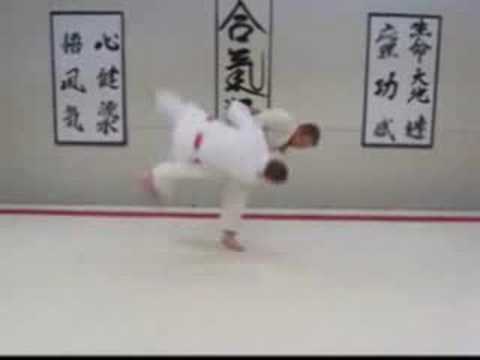
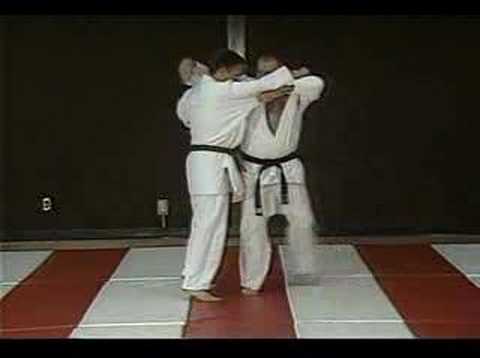
Nice illustrations Sean. Those really show the separation between uke & tori nicely.
As an additional point, there's two sort of principles at work. Harai and other hip throws, at least in my expereince, throw by tori's hips and center displacing, in and under, uke's. I find gurumas function more by off-balancing uke's uper body and focing him to rotate around an isolated point. So in O guruma, tori raises his leg and touches uke's hip or upper tight, isolating that point. Tori's motion force's uke's upper body to pitch forward and rotate around that point. Viola! Throw.
On another note. I find the angle and motion to be very useful when people are leaning forward and/or stiff-arming.
yes the kake is very differrnt= o garuma is like a backward hiza to the hip while harai is a reaping action like a backwards osoto
I was just thinking... In a way, you could almost look at these two as part of a series of "lift your leg" throws, wherein you get something different base on where uke is. In other words, you almost don't care what uke does once you've mucked with his balance, you basically lift a leg and toss him. Granted, this may be a gross over-simplification, and there are some crucial differences between all these. I do know, though, that many times, I've planned to do one of these, but uke moved in an unexpected way, but I got one of the others. That, and I have a compulsive habit to look for patterns, so I'm just going to mash these together and see what I get...
1) O soto guruma. Uke's facing the opposite direction entirely. You reap and get both his legs.
2) O soto gari. You only get one of the legs (the support one).
3) Harai goshi. Uke's started to turn toward you a little, and he rotates over the hip.
4) O guruma. He's rotated even more and he rotates over your thigh.
5) Ashi guruma. He's little further out and you catch his knee.
6) Uchi mata. You don't even get the far side of uke anymore, but snatch the one leg closest to you.