Shiho nage

Started by Sean Ashby · Apr 29, 2009 · 7 posts

(368 posts)
Shiho nage
I think I've always been taught to hold uke's hand up and behind them, extending them backwards, but at the recent playday, I got to work with an aikido-ka from a different system and noticed his shiho nage was a little more "classical" in that he collapses the coiled arm and emphasizes a downward action. It felt pretty effective to me, but I wondered what some other thoughts about it might be.

Here's a video of what I'm talking about:
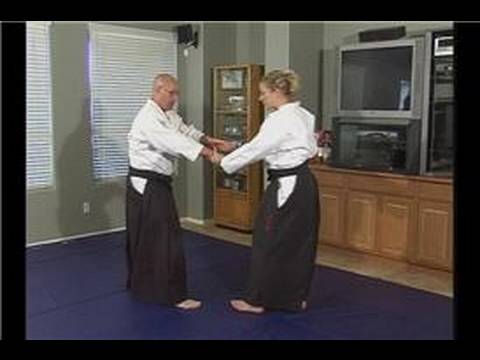
YouTube video
(81 posts)
Its real effective if uke is smaller or less powerful than you are but if uke is stronger than you and can uncoil his arm and you've collapsed yours.. your in a world of hurt. By taking uke up and back, you extend uke and it gives you a better chance against a larger/stronger opponent.

Another way to think about it is: If you are making a downward motion to throw uke, your doing to things...1)using strength 2)deciding when uke should fall instead of letting uke fall when he comes to a failure point. Same concept as #5 ushiro-ate, you could pull your arms down and attempt to destroy uke or you can let uke fall out from under your hands as he losses it and goes w/ gravity...
(368 posts)
I found another video of the same dude describing more in detail what he's doing.

YouTube video
(40 posts)
Sean Ashby wrote:I found another video of the same dude describing more in detail what he's doing.

YouTube video


Hey there, I think James summed it up pretty well.. One thing I like to do to show the difference between down and out is to stand facing opposite directions (shiho's ending position) except with your shoulder even with uke's shoulder, clasp your hand in his hand and on the count of three you both get to pull down... whoever is stonger, faster will win. Reset and do it again, but this time uke has to stay with his down and on the count of three you get to push out (not up but out at shoulder height) .... the balance break uke experiences shows you the difference between grounding them, using strength, and extending them.

Ikei,
Jeff
(368 posts)
Cool, thanks for all the input. Another issue I have sometimes is, once I have uke extended out, he has a natural tendency to keep turning around until he's facing me (not necessarily intentional, they just keep turning). Now I can pretty much always catch them after they do with kote taoshi (which surprises them!), but still it makes me wonder if I'm doing something goofy. Or is it perhaps that I'm 6'2" and for someone tall, they just naturally turn like a ballet dancer under my hand? Or maybe I'm to "up" and not enough "out"?
(81 posts)
My first reaction would be that your adding some torque/power at the top that helping/causing uke to turn more that he should, but ill play with it some and post again later...
(583 posts)
kinda interesting side note-- some other Tomiki folks folks like to coil down at the end as well but then they compensate for the realitive weakness by adding a small lateral move through ukes hip-- this side dispalcement gives them a wonderful beginning for thread the needle application without the potential downside of moving away from uke's line which tends to be vulnerable to drawing them on top of you